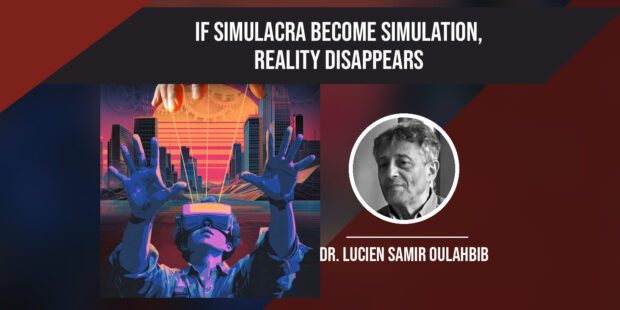
If simulacra become simulation, reality disappears
by Dr. Lucien Samir Oulahbib
As avid readers of his work will know, Jean Baudrillard liked to play on the proverbial maxim ‘reality exceeds fiction’ by pointing out, with his usual Rabelaisian wit, that “reality” itself is already a ‘simulacrum’; it has always been (and still is) intimately constituted of ‘fictions’ in the sense of myths woven from tales and legends, but also from accounts of various exploits relating to perennial questions that have existed “since the dawn of time ‘ (another proverbial maxim) from the beginning of our world to these new fables that today claim to supplant them, not only in order to be able to narrate the why and how of the world, but also to be able to manipulate it, including life and its ‘sex appeal”, through artificial intelligence and permanent hormonal blockage.
Hence a story to be made of the ‘Simulacrum’, this indescribable link between us and the world called “reality” with its immemorial imaginaries filtered by conceptions for perceptions that enable action; a link that, according to Baudrillard, has been manipulated by ‘three Orders’ [1]. First, there is what he calls the ‘First Order’, which recounts and imitates these immemorial stories or myths, but distorts them by reformulating their tales, legends and testimonies in order to use them as a prism for the concerns of a particular era (as will be seen later with a few examples)..
We also have the ‘Second Order’ — that of production — which increasingly manufactures these narratives industrially and even materializes them into fetishized commodities, according to Marx’s term, which Baudrillard takes up and extends to ‘immaterial’ objects ‘.
And these have gradually shaped the Third Order’, our current one, that of simulation or total modelling, which now prevails over the first two, even if the latter continue to act and even resist its dominance through the persistence of the ‘spring of the peoples’ (now called ‘populism’ by the beneficiaries of this Third Order).
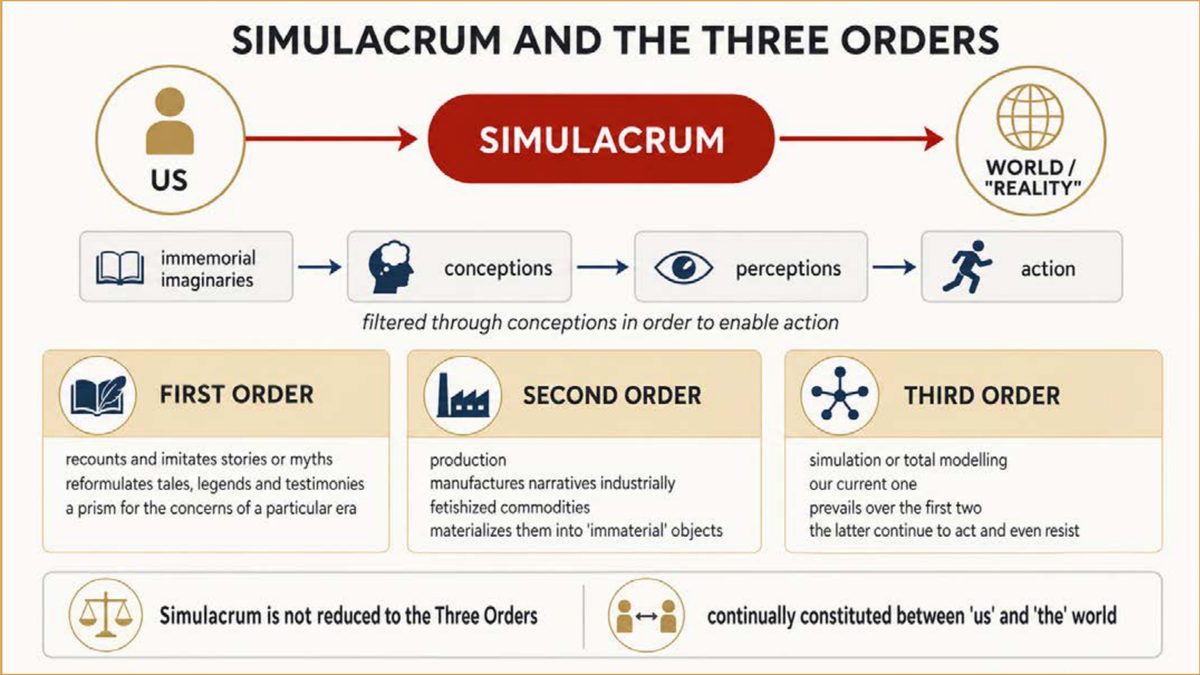
In any case, to say that ‘reality’ ‘in itself’, this presence that is both immemorial and ever-changing, or the other name for “Simulacrum”, does not mean that it is reduced to these ‘Three Orders’ or even to a sum of ‘wills and representations’, but that this Simulacrum is continually constituted between “us” and ‘the’ world as an active link that has always been, is and always will be our universe: that of the Simulacrum and its immemorial imaginaries filtered through conceptions in order to enable action…
It is constituted first and foremost by all these myths, these mental reference points (or archetypes according to Jung) that act (even today) as popular references passed down secretly, unofficial (non-institutional) ‘truths’ and passed on by word of mouth; this is what languages stabilize in their everyday use through a meaning that is both pragmatic and symbolic, sometimes validated, but after the ‘battle’ by certain official institutions such as the Academy…
Thus, for example, a country’s flag or even the way a miniskirt or a veil is worn are not just pieces of fabric, but ‘living’ objects, “fetishes” with a ‘hau’, as Marcel Mauss said in his Essai sur le don, that is to say, a ‘spirit’ as indicated by the Maori, embodying a certain mode of possession of the world that can arouse joy in some and anger in others…
This therefore also implies a strong and complex interaction between imagination, conception, perception and action, the four faces of the simulacrum, that of this ‘stratified reality’ (as Husserl might say), eternally “present” despite its constant ‘generation and corruption’, in Aristotle’s words. This permanent interaction between imagination, conception, perception and action is also confirmed by the most recent psychological analyses (such as those of Joseph Nuttin in Theory of Human Motivation).
But this presence of the Simulacrum, or the Simulacrum as the Present in constant motion, is only the confirmation today of what was already an individual and collective evidence (Heraclitus), namely the force of a ‘common’ culture (Emile Durkheim) or the ‘spirit’ of the people (GWF Hegel) with its dedicated gestures and expressions (Marcel Jousse).
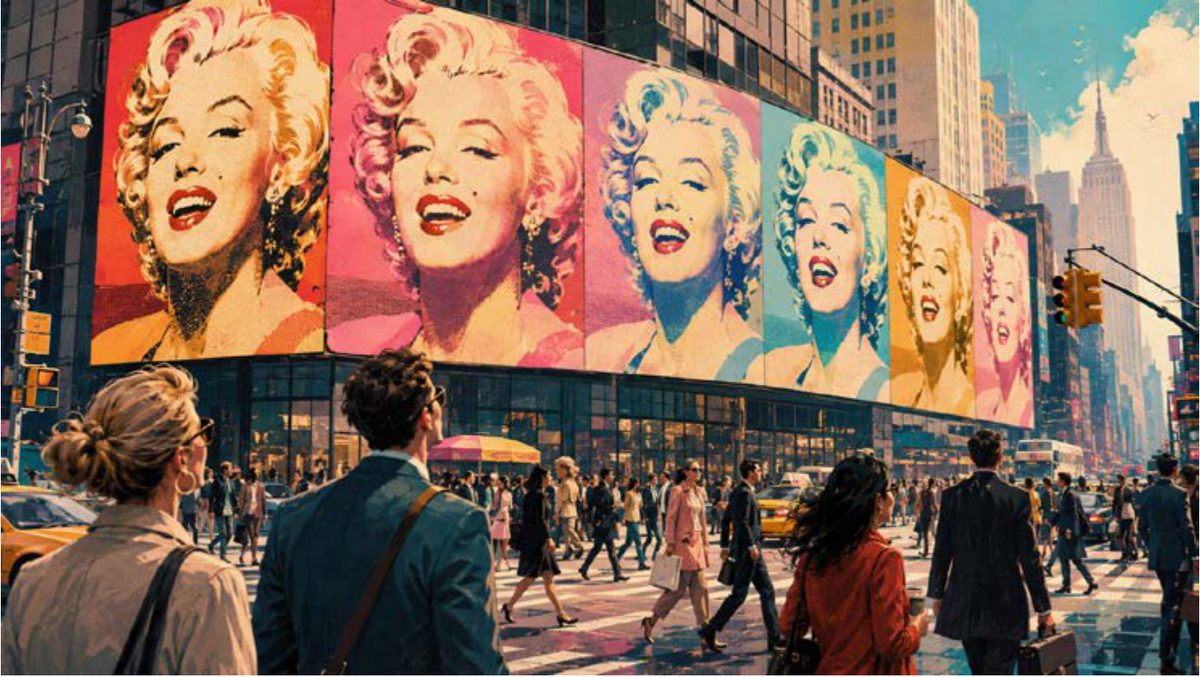
The simulacrum itself, as an intertwined reality, is therefore the constant structure of ‘human vision’ (an entanglement of numerous meanings, as in a flag, a tone, a gesture, a smile, such as Marilyn’s smile multiplied by Andy Warhol, as Baudrillard noted) continuously enriched or impoverished by the realization and fear engendered, all dictated by certain ‘passions’ or “motives” formulated by Wilhelm Dilthey and Max Weber and taken up by Joseph Nuttin.
Meanwhile, Maurice Reuchlin, following Baruch Spinoza, called these preferences ‘conations’, ‘tendencies’ (as they were called in the time of Georges Dumas) fueling the desire for action and achievement, but which can, on the contrary, be impoverished or prevented by depression, anxiety, melancholy, boredom and the refusal to act, synthesized in the “fatigue” of being, of ‘growing up’, as Pierre Janet put it.
THE THREE ORDERS MANIPULATING THE SIMULACRUM.
And within the Simulacrum, oscillating between salvific and destructive narratives, the First Order, or the eternal world of interpretation and imitation, comes into play; a world ‘counterfeited’, as Baudrillard bluntly put it, by the “Renaissance”, which rewrites and reduces myths (as Racine does) to mere fairy tales and legends, even though what they recount is very ‘real’ (life, death, love, hatred, luck, misery, happiness, wealth, poverty, illness, pride, vanity, modesty) embodied in and by these imaginary objects that are myths or immemorial tales, whose purpose is not to prove that they are ‘accurate’ but rather to nourish spiritually those who tell and listen: all those children and adults around the world who dream of love and hope, always renewed, but also of war and revolutionary exploits, all in order to encourage them to live the present reality in its multiple levels or “layers” of the Simulacrum.
Especially today, in its Third Order, that of simulation/modelling according to Baudrillard, or how to live increasingly alone in the so-called democratic era, when family and clan ties have been weakened and insufficiently replaced by affiliations to electronic social networks that are often ephemeral, fragile, or worse, generated by artificial intelligence, itself manipulated by the Third Order…
This is the ‘lonely crowd’ sung about by the new bards of the 1960’s revolt, who were also nostalgic for the strong bonds born of myths, despite their often restrictive imitations since the emergence of the First Order during the so-called Renaissance, as also expressed by certain Germanic romantics such as Fritz Stern and Stefan Zweig…
But how can we continue to live fully if we are no longer able to think within this strong mental bond that is the Simulacrum itself, which has existed since the dawn of time and which supports, nourishes and cares for our entire ‘body’ (material and immaterial)? How can we avoid a certain civilizational emptiness in our era, dominated rather by its Third Order, that of simulation, which pushes its calculations, injunctions and experimental injections into our minds and flesh, repeating in this case the methods of the First Order, always carried out in the name of Heaven, and today in the name of Earth? whereas without freedom of mind, our ‘body’ cannot live (and let us not forget that ‘animals hide to die’).
THE SIMULACRUM IS NOT IMITATION.
In the beginning, the presence of the Simulacrum (or the layered reality intertwining at each ‘instant’ — this “Portico” — myths, tales, legends, testimonies, conceptions, perceptions, actions) was transcribed by numerous accounts, including those that were ‘written’ (already reworked) and recounted by the Bible and the teachings of Brahma; then two thousand years later and at the same time (6th century BC), it was the turn of Asian written thought (Buddhism) and Socrates’, for example, through the ‘allegory of the cave’.
Let us briefly recall that the First Order, in its desire to both imitate and rewrite founding stories or myths, began at the start of the New Age of Democracy in Europe (12th and 13th centuries according to Henri Pirenne, Max Weber, Jean Baechler, etc.) through an increasingly significant theological and philosophical opposition in the search for Truth, this dialectic between logic (what can be) and ethics (what must be) within the freedom of imagination and freedom of general behavior (14th, 15th, 16th centuries).
All this was then criticized by Catharism, Calvinism and Jansenism (17th century), which rose up, for example in France, against Molière’s theatre (which was strongly opposed to forced marriage), while at the opposite end of the spectrum, Jansenism ‘voted’ in favor of Racine’s theatre because it proved to be a good recruit for this First Order of ‘Counterfeiting’ (according to Baudrillard): imitative and reductive.
Indeed, Racine imitates, while truncating it, Euripides’ Hippolytus by making Hippolytus (son of an Amazon queen and Theseus) desire his father’s wife, Phaedra, whereas in Euripides’ play, Hippolyte is only in love with another woman, Aricia, and therefore cannot desire Phaedra, his father’s new wife; but Racine, as a Jansenist, wants to show us (even against the will of Louis XIV, incidentally) that we are all sinners, that there is no such thing as ‘perfect’ human love, unlike Euripides, who respects the redemptive role of the myth of love between humans (albeit troubled by the gods), thus preserving this ideal even in the tales and legends of the Beautiful Shepherdess and Prince Charming, which are not intended to deceive or lull us to sleep, but to paint an ideal.
This imitation, truncated as it is by Racine, is a prime example of how the First Order can manipulate myths, as in the play Hippolyte, reducing it to a carnal temptation when it is in fact a political prohibition: Hippolyte cannot marry Aricia, whose father is the enemy of Theseus, his own father.
Corneille, on the other hand, circumvents this reduction of the myth of redeeming love in his Cid by the fact that the two heroes are saved in the end; but Shakespeare obeys the curse of transgression, this time social: Romeo and Juliet die together.
It should also be noted that, prior to this period, according to the rewriting of the stories (in the 12th century with the legend of the Round Table) of the myth of Excalibur (5th century), Lancelot is supposed to have betrayed King Arthur, admittedly under the influence of a curse, but in accordance with the fact that the supporters of the expanding First Order had decided to “counterfeit the myth, in Baudrillard’s words, by deciding that it was not possible to have a chaste relationship of adoration with Guinevere, as required by the rules of courtly love [2], and at a time when the adoration of Mary, mother of God, was beginning to prevail (12th century) [3].
This is why all this seduction of the flesh turned towards Good, when it is supposed to have been damned since the Fall, must also be fought by the First Order, not only by manipulating ancient myths (there is no pure love except with God, which will also be the theme of Alfred Musset in indirect confrontation with Georges Sand in On ne badine pas avec l’amour…), but also by rejecting the world and choosing its opposite; or the very idea of contemplation/adoration (as today with deep ecology and the precautionary principle, this new Patriarchy), turned once again towards the heavens with their terrible sectarian guardians who maintain their own interpretation of myths and legends through the First Order, today artificially preserved in its vestiges by the Second Order of production under the leadership of the Third Order, that of Total Simulation/ Modelling…
But even in the 12th century, when ‘we’ find a city once again in full expansion (as in the democratic Roman and Greek eras), this does not mean that action on Earth is no longer coordinated with that always taking place in Heaven; the Good News proclaims precisely the coming of its Redeemer, original sin is thus forgiven, it is possible to bite into the Apple with ‘love’ despite its conflicting gravity between Good, Harmony, and Evil ‘that pure concentration in oneself’ (as Hegel said), which God’s Judgement will stabilize, even if we are able to conceive and therefore see in order to act; but the ancient myths, their magic and other spells (Excalibur) are still present, all linked to the ‘alchemy’ of Force (Fortune and virtue, as Machiavelli would later say in the 16th century).
The power of Love that articulates them had therefore already recognized the Redeemer, hence Abelard’s gesture towards Eloise (12th century) and also more generally concerning activity on Earth and no longer only in Heaven, hence also the gesture of Francis of Assisi (Franciscans), Thomas Aquinas (Dominicans) and Loyola (Jesuits) (12th, 13th, 14th, 15th and 16th centuries), while being confronted with the beginnings of humanism with Boccaccio (15th century) Rabelais (16th century), while seeking not to oppose Athens and Jerusalem, thus following Augustine’s testament; which later led Leo Strauss to say that someone like Maimonides (12th century) was much more ‘rational’ than the so-called rationalists of the First Order, who reduced everything to measurement, to the microcosm, forgetting excess, the macrocosm, this delirium requiring reading, acting, between the lines of the interstices, as in the fable of the Butcher of Chuang Tzu, which Baudrillard loved to tell, when it comes to progressing smoothly in individuation (so dear to Georges Simondon), this appropriation and carnal possession of the Simulacrum, as Marcel Jousse also indicated…
THE SIMULACRUM IS NOT REPRODUCTION EITHER
Thus, there is a growing desire to manipulate, imitate and reduce the myths, tales and legends that always weave the Simulacrum, as the First Order does, in order to use them as tools of power, wealth and prestige; which is very different from ‘distinguishing’ (which does not mean “separating”, as Descartes points out in his Principle 8) between good certainty and bad illusions, especially in the passions that swirl within “animal spirits “; which implies the emergence of the for-itself and the in-itself, analogy, and deduction, for example in Bacon, Linnaeus, Hume or Kant, in order not to arbitrarily sever the link, as the evil Boucher does, between the various strata of the Simulacrum (or Entangled Reality), but to better understand the attraction of the Apple (but not with a view to imitating its Creator)…
However, this is not a question of opposition between the mathematician and the philosopher or the poet (Leibniz was both, but not Candide…) as Michel Foucault believed (in The Order of Things), because the increasing complexity of conception and therefore of perception does not mean the total rejection of myths, tales and legends, even if they are manipulated, but above all that they are not the only explanation of the world and of action upon it; thus, witches are no longer burned at the stake in the age of the Encyclopedia (and today, they ‘must’ even replace ‘skeptical’ scientists who have been placed on the Index according to the political ecologists of the Third Order, that of Simulation, whose apocalyptic predictions become oracles…).
Nevertheless, it is not enough to classify the world if we want to continue to imagine the interactions between its physical and metaphysical strata that animate the Bios, as the Simulacrum itself allows (this reality intertwined between conception, imagination, perception and Logos) in order to grasp all the possibilities for acting within and outside oneself as an individual and as a society, in the words of Norbert Elias.
It is therefore by expanding once again towards the entangled reality of the Simulacrum, and not just that of the First Order (imitation/experimental reduction) or the Second Order (production of fetishes on demand or increasingly manufactured and then industrialized power) or even the Third Order (simulation and modelling of ad hoc behavior), that we can still grasp what Hesiod relates with the Titans, for example (along with Atlas and Hercules), not to mention La Fontaine’s Fables, Grimm’s tales and Perrault’s tales, in which it is necessary to bathe in the river of changing waters (Heraclitus) of the Simulacrum, which also flows like its own ‘blood’ (Rimbaud); its ‘blood’ also being made up of the ‘imagination’ of a people in friction with their memories and sufferings (the Sleeper in the Valley), joys and sorrows assembled in stories, forest of symbols also referred to by Gilbert Durand, which always envelops every internal and external gesture of each and every one of us (Marcel Jousse) in suspension in the World as Will and Simulacrum, and not just ‘representation’ (as Baudrillard insisted) produced by the Three Orders seeking to manipulate its strata.
IT IS NOT A QUESTION OF ‘THEM’ VERSUS ‘US’
Don’t forget either that the distinction between Guy Debord (in The Society of the Spectacle) and Jean Baudrillard (in The Consumer Society) is not only that society has always been a “spectacle”, but that ‘we’ are also included in the process of denaturing the Simulacrum in these Three Orders. Consequently, it is never simply a question of ‘them’ against ‘us’, but of “us” allowing ‘them’ to lead us to interpret the simulacrum in what we love and hate to experience because we are incapable or unwilling to do so…
‘We’ are therefore also ‘willing slaves’ (as De La Boétie said) who love to adore the law issued by Leviathan against Behemoth: ‘One more effort if you want to be republicans!’ said Sade when he wanted to make Justine suffer to death in order to feel like the absolute master of the Simulacrum, like Juliette…
The political law governing the Simulacrum in these Three Orders, a ‘poison’ presented as a medicine, is thus produced by ‘ourselves’ and is supposed to protect us from our own “Behemoth” (our hubris, our own poison), this desire to become the ‘sole’ owner of the Simulacrum.
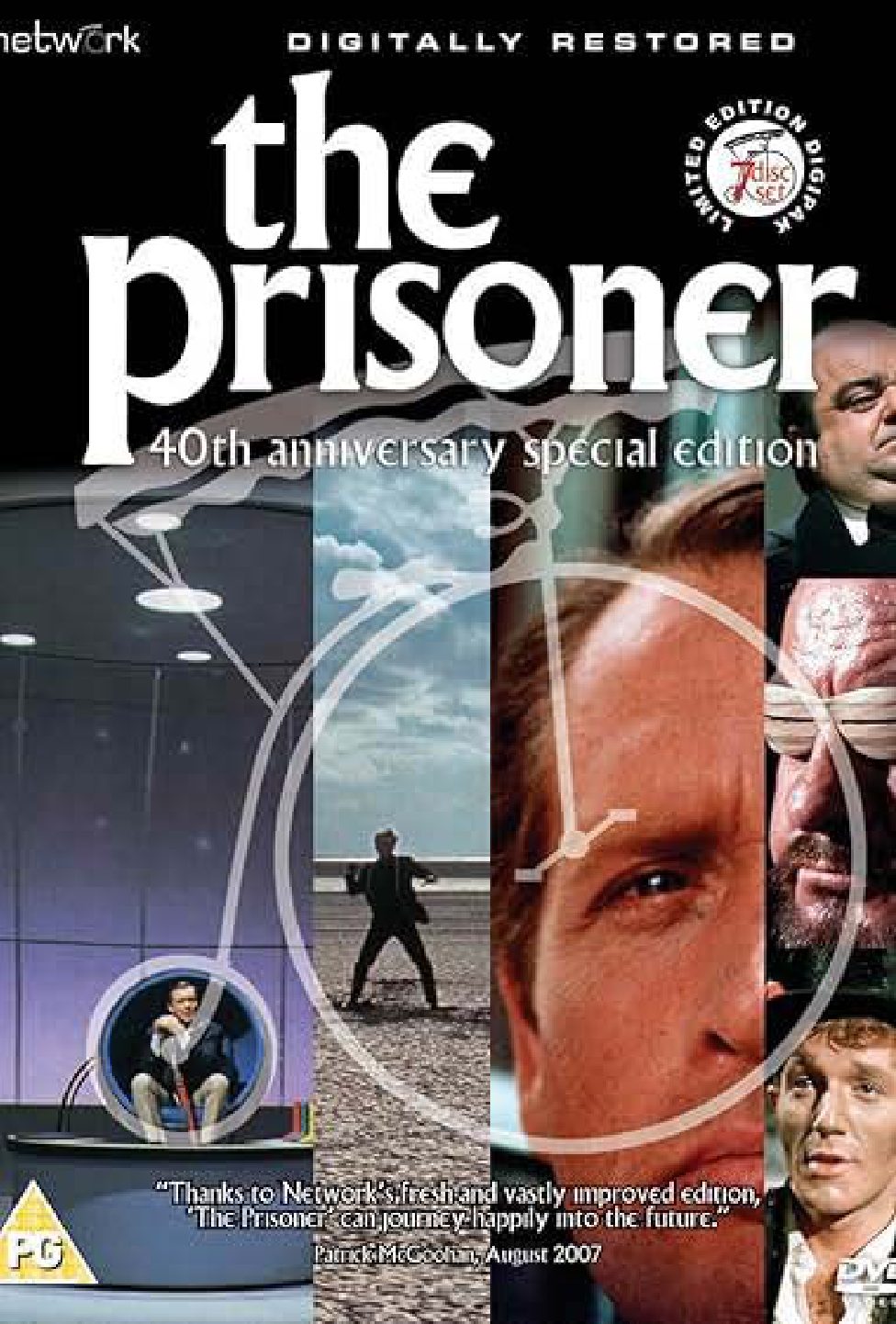
But ‘Who is number one?’ asked the Prisoner (from the famous television series) to Number 2. ‘There is no number one,’ replied the latter, ‘you are number 6.’ ‘I am not a number,’ retorted the former (which was always the wrong answer).
Are we capable of overcoming these contradictions between the desire to be free within the Simulacrum and the fear of being our own master? Hence the significance of the Three Orders, particularly the last one, which now produces the first two in their myths, behaviors and norms.
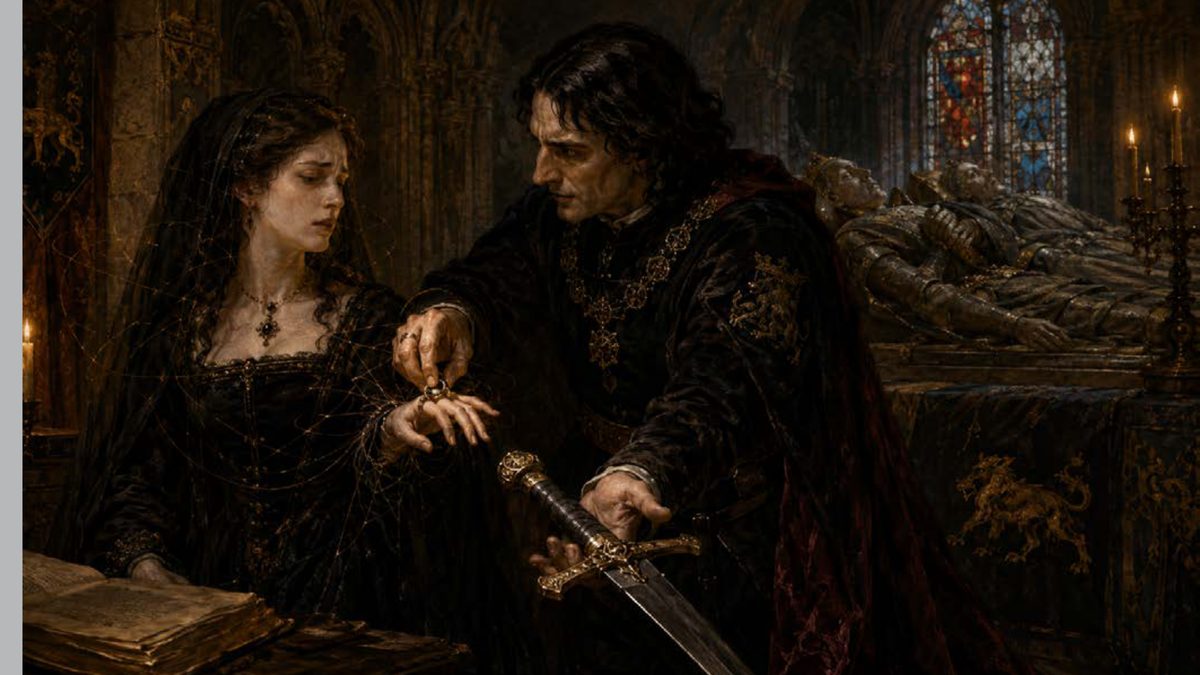
It is comparable, in a way, to the strange love story written by Shakespeare in Richard III, where the latter forces Lady Anne (Act I, Scene II) to slip the ring carved from his coat of arms onto her pretty, delicate finger as a token of their alliance, even though he has killed her father and, more importantly, her husband, ‘because of’ the love he feels for Lady Anne’s beauty, he says; but at the same time, and in a strange way, he begs her to kill him in return if she does not agree with this fanatical and fetishistic love, even giving her his sword to do so, but she refuses to do so because she does not have the will to do so, or perhaps because she admires the demonic ferocity that has seduced her to the point of death, much more than that of lions fighting for the lioness queen or stags fighting to win the heart of the beautiful doe. She hesitates because she is paralyzed by this superhuman energy that ‘crystallizes’ her, as Stendhal analyses (just as Orpheus crystallizes Eurydice when he turns around, but unlike Richard III, he does so unintentionally).
Or “we” are also crystallized, paralyzed, ‘alienated’, in the anti-Hegelian sense misunderstood by Marx, because, like Debord, he opposes only a ‘we’ to a “they”, whereas we are also responsible for this degradation of the Simulacrum, this intricate reality veiled by the Three Orders, which are not only constructed by their imitation/production/simulation, but also by the specific human life (Bios) that glorifies this type of political and animal cruelty, whose perversion becomes demonic.
“ We’ are certainly ‘political animals’ (as Aristotle said, ‘social” as Marx amended), but we also attempt to become God and thus to dominate the Simulacrum by claiming to speak in its name (as ‘science’ degraded to scientism now does within the Third Order) in order to place ourselves outside any rational and political criticism, which means becoming nothing more than a demon, a fallen envious angel.
THE THIRD ORDER OR TOTAL MODELLING
And today, at the dawn (without the ‘dawn of knowledge’) of the third millennium (according to the standard calendar), ‘we’ are this time mainly generated by the Third Order. It now also subjects the First Order or myth/imitation and the Second Order to this production of fetishes, all in the name of total modelling (after the ‘total mobilization’ studied by Ernst Jünger in his book ‘The Worker’ about the Second Order).
It seems that the ‘official map’ of the Simulacrum (this stratified reality intertwining since the dawn of time and its immemorial imaginaries of conception, perception and action), which has only been generating these Three Orders of imitation, production and simulation for three or four centuries in Europe, then in America and throughout the world, has now become the only ‘real territory’ within each mind, acting against its own freedom, as Baudrillard said (also read by Michel Houellebecq in ‘The Map and the Territory’).
This means that we are now mentally programmed not only by ourselves under the influence of the ‘benevolent’ myths of the First Order secreted not only by the media, but also by all consumer objects, material and immaterial, mediums and fetishes of the Second Order, as Mc Luhan had thought (and on which Baudrillard partly bases himself): “ the medium IS the message’; which means that this reversal of the situation IS the condition for the emergence of the Third Order by transforming the transmitter into a broadcaster: in the sense that anything that is not ‘produced’ by it will not be “seen” by ‘us”; it becomes the supreme referent (TV replacing newspapers and radio) of all the signs that it can then model at will; where one can, at will, reduce a social fact to a news item and vice versa; thus an act of war becomes an epiphenomenon, a Behemoth ‘demanding’ a Leviathan. This is the simplistic and absurd message to which ‘we’ must then obey, at the risk of becoming outcasts, conspiracy theorists, extremists, etc.
Nevertheless, some may object that this depends on the ‘simulation’, because if we believe that scientific modelling, for example, of the future of the planet, is wrong, and this without proof, we would in fact be rejecting scientific discourse in general.
Why? Because if this perception is indeed fabricated, the same people will tell you that it is done by consensus by legitimate institutions that do not wish to mislead you, let alone intentionally. Therefore, simulation would simply serve to prevent the worst and prepare you to do the best, not only for yourself, but also for the good of all human beings and all living creation on this planet.
However, ‘we’ may persist in thinking that it is unfortunately much more complicated than that. Because these ‘institutions’ are just as much under the influence of Behemoth; and no Leviathan comes to stop them in reality, except by silencing any dissenting voices, even though it is obvious that in many areas within the Simulacrum there is no real evidence to show, for example, that replacing nuclear power with a forest of wind turbines and solar panels, or that rejecting natural immunity in favour of RNA injection, would actually be ‘better for our well-being’.wind turbines and solar panels, or that replacing natural immunity with RNA injections would be a ‘better way’, which also implies that the Third Order is still riddled with power struggles despite the impression to the contrary, like Marilyn’s smile multiplied ad infinitum in simulations…
Some people are even imprisoned because of these power struggles, such as Oleg Maltsev in Ukraine or Boualem Sensal in Algeria, simply because they said that the reality on the ground or in history was not the same as the one that those in charge had forgotten to show. The former wants to analyze the difficulties of continuing to live undisturbed in a war zone, while the latter wanted to point out that geography, like history, is often dictated by the strongest, disregarding the truth (accuracy and meaning) and thus diverting the territory of simulacra to their own game of cards…
Ultimately, ‘we’ are still in the random situation of the Middle Ages described by Baudrillard, where the perception of events is increasingly fabricated, even today with artificial images, while more and more individuals are trying to escape this frightening and nightmarish but exciting reality created by the Second Order of media, by shutting themselves away in a virtual helmet and trying to stay there permanently in order to live in a time immemorial, as shown in Star Trek Holosuite, or by remaining immersed in the endless stories of the First Order, as in the past, when television soap operas took over from the daily serial novels of the 19th century.
VOLUNTARY SERVITUDE
But perhaps we are wrong, as Baudrillard also said: some people undoubtedly prefer this, to escape for good, to refuse to see where ‘we’ are, because if you say “no” to this manipulation of the Simulacrum (of ‘our’ reality stratified by the imagination filtered by design so that perception allows action to emerge) it will then be very difficult to be free, to be your own king, your own sovereign.
Some people don’t like that. Remember, when the revolt against this manipulation of the Simulacrum began in 1979, there were few of us, and if the powers that be had not been so quick to drown it by saying that it was “rage ‘ (of the conspiracy), we could have been more numerous, provided we were well armed by Criticism (despite the criticism of its supposed vacuity because it reinforces ‘the’ simplistic System of “them” against ‘us”…). But it’s not that simple. The majority of people are always fascinated by brute force. Some, like Lady Anne in Richard III, are very impressed if you are stronger and luckier than them.
And as Machiavelli said in The Prince, the people who are defeated, who have lost, admire the victor and imitate him by adopting his values. In the present case, we can also say, as Leo Strauss argued against Max Weber, that the driver of the gas chamber train knew what he was doing and that, therefore, ‘we’ cannot simply analyze him as a victim, but above all as a genuine participant who acts not only out of fear, but out of voluntary slavery; which can cause disturbances in an alienated mind, as Oleg Maltsev observed on the battlefield; and this is perhaps why his accusers imprisoned him: because they did not understand the necessary empirical analysis, on the ground, and not in the offices, of this type of ‘madness’ produced by the spirit of war, especially when some of these actors become criminals.
So it is this type of crime, also found within the elite — to whom we have given the keys to Leviathan — that becomes ‘ours’: it is indeed the ‘perfect crime’ as Baudrillard called it in one of his last books. For just as the devil wants to prove at all costs that he does not exist, the Third Order at the foundations of contemporary society, like the art of the same name, always conceals that Good is His, that lies are truth, that war is peace, so well described and so precisely in George Orwell’s 1984.
And as indicated by the ‘eternal return of the Same’, the most powerful functions within these Three Orders (now dominated by the last, the Third, the most powerful and also the most cruel, like Richard III) fall to the most skillful and aggressive individuals, capable even of transforming their hideous charm into beauty, like Lucifer, the fallen angel.
Thus, permanent functions that require intelligence, cunning and dexterity to manipulate all kinds of sensibilities and feelings are always captured by those who are able to impose their authority and charisma, which are also simulations, but capable of knowing how to maintain the amplitude of the link between thrill and fear, the basis of power that people fear but want to see, especially when it is far away (as on a screen with shimmering pixels).
This is why this struggle between masters and slaves, between rulers and the frightened, has always been the real issue in Polemos, as Hegel (and also Nietzsche), but not only between owners and workers, as Marx said, nor between weak Judeo-Christians and strong Germans raised up again, as Nietzsche hoped with the support of Dionysus and Zarathustra, but between people who are not afraid to die and those who are.
This is why Lenin, who read Hegel very well, wanted this struggle to be permanent, and not only when the ‘class’ was abolished, because ‘the struggle of opposites must be infinite,’ he said in his ‘Notebooks,’ in order to retain power so that his Idea, which already combined the two Orders (imitation and production), could become the Simulacrum itself, of course (its current followers being at the service of the Third Order…).
Carl Schmitt imitated Lenin’s conception in his time with his political definition of ‘friend or enemy’, as did Hitler, Stalin, Mao… But the supporters of the absolute capture of the Simulacrum for their own ends never accept defeat, so they can’t imagine anything other than dying (or causing others to die) by setting their own country on fire…
Also, ‘we’ can now see this current suicidal race towards nuclear death as a ‘final orgy’, as Oleg Maltsev writes (see his latest book and the previous issue of Baudrillard Now), similar to Georges Bataille’s fascination with Aztec human sacrifices (in his book La Part Maudite), when the sacrificed becomes the true king for a year before being sacrificed; we can also observe this same delightful and exciting case of a race to the abyss carried out by the powerful globalist network of Transnational Corporations (TNC’s) at the heart of this Third Order.
Indeed, they are increasingly manipulating the technostructure of the world states with which they work hand in hand to accumulate a very large private and public debt (226 trillion dollars), similar in appearance to a frantic race towards the ‘potlatch’ as Marcel Mauss understood it (in his Essai sur le Don) or how to spend wealth as if it were not ‘excrement’, as Bataille thought (in the same work cited above), but a neurotic onanism seeking to refuse to become an adult (and therefore responsible) according to Sigmund Freud and Pierre Janet (even if they did not agree that this process could be reversed…)..
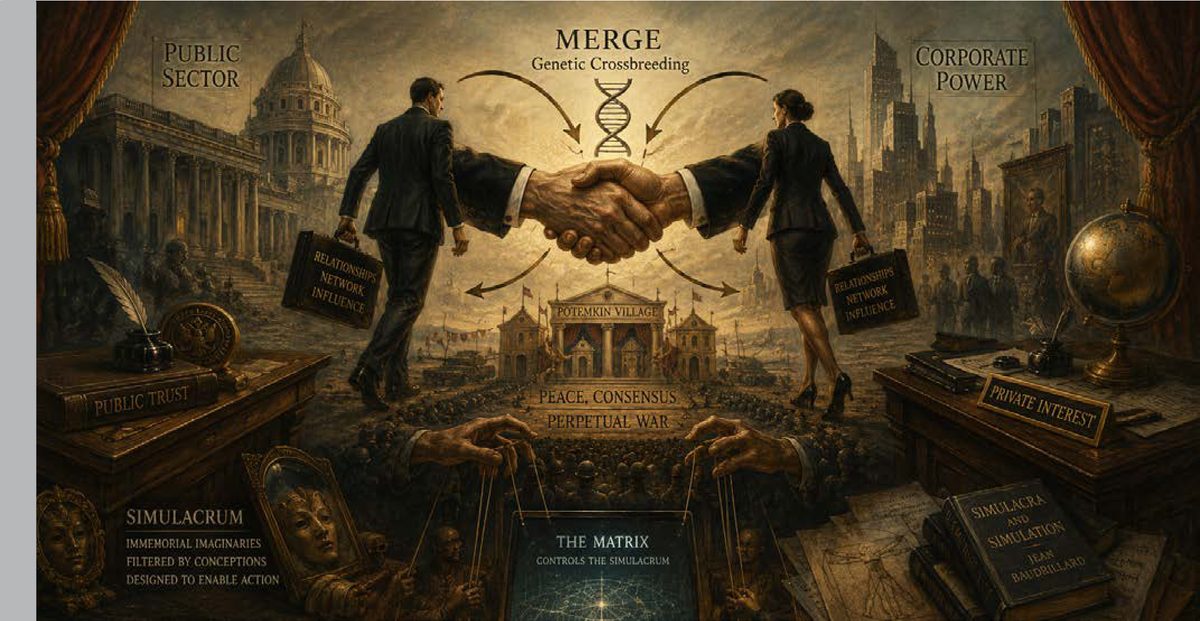
This is why global private companies and public states seek not only to continue running together but even to merge; like a kind of genetic crossbreeding where, for example, a person working in the public sector leaves it and takes with them a portfolio of relationships that has enabled them to obtain an important position in the private sector of their choice, and vice versa. Is this corruption? Of course. But just because it’s not new (since humanity left the Garden of Eden, we can guess…) doesn’t mean we can’t think about how it currently works within the Third Order…
Or how to create a formidable Potemkin village and a perpetual war called ‘peace, consensus’, because you control the Matrix (inspired by Baudrillard’s book ‘Simulacra and Simulation’) and therefore the Simulacrum in its immemorial imaginaries filtered by conceptions designed to enable action.
THE THREE ORDERS AND THE ETERNAL RETURN OF THE SAME
However, this does not mean that the ‘eternal return of the Same’ does not continue to function within the Third Order, which oversees the other two; in the sense that it is always necessary to continue to acquire (even in a totalitarian system) certain skills that are useful for climbing the ladder within the Matrix in order to reach the top and, from there, seek out where one can enjoy a good life, sometimes paid for by the taxpayer, even if everything is collapsing around them.
For example, some states have growing debts, but they nevertheless pay a lot of people very well to tell them that ‘you are in trouble’… Or, on the contrary, to tell them that everything is fine, that they have nothing to do with it, that they should leave if they do not believe in the Good propagated by the Third Order.
This is an important point: we are in the midst of the diversion of the Simulacrum, real and permanent, which means that there is no longer any end or scenario except locally. For example, the endless struggle between eternal ideologies such as the new illuminism on the imminent end of the world versus the generalized melting pot ‘from the river to the sea’.
Or, as the directors of the Third Order have been saying (since the 1960’s, incidentally), if ‘we’ cannot transform ourselves and urgently switch to other modes of production such as wind, solar, electric and renewable energy, and material and immaterial objects controlled by artificial intelligence, we will be doomed, damned. Yet other alternatives are possible, such as nuclear energy and, in particular, a new system of neutron reactors capable of supplying energy locally and even recycling the heat energy emitted by giant databases.
In other words, being under the thumb of the Third Order, which also governs the First Order (imitation/reduction of immemorial narratives) and produces all fetishes (Second Order), does not mean that we are outside the eternal matrix of human reality, that of the Simulacrum; which implies that the struggle for power, wealth and prestige within it remains. But the objectives have changed. It is a fight to the death between a new oligarchy — which is not only a Caste (co-optation of the powerful) but a Sect (anyone can join but no one can leave, as in the song Hotel California)- and a new “springtime of the peoples” who aspire to a world where citizenship and humanity are not constantly opposed as if they were antinomies, when in fact they are two sides of the same coin, that of the Simulacrum, the strong link between the Night of Time and the hope that Tomorrow will always be another Day.
[1] https://shs.cairn.info/l-echange-symbolique-et-la-mort‑97 82072698491‑page‑81?lang=fr : “ Three orders of simulacra, parallel to the changes in the law of value, have succeeded one another since the Renaissance: — Counterfeiting is the dominant pattern of the ‘classical’ era, from the Renaissance to the Industrial Revolution. — Production is the dominant pattern of the industrial era. — Simulation is the dominant pattern of the current phase governed by code. The simulacrum of the 1st order plays on the natural law of value, that of the 2nd order on the market law of value, and that of the 3rd order on the structural law of value.”
[2] https://www.larousse.fr/encyclopedie/divers/litt%C3%A9rature_et_amour_courtois/38026#:~: text=L’amour%20courtois%20n’est, le%20chevalier%20 est%20son%20vassal.
[3] https://www.la-croix.com/Definitions/Bible/Marie/ Origine-du-culte-marial
Discover more from BAUDRILLARD NOW
Subscribe to get the latest posts sent to your email.